
Taekwondo, a martial art that has captivated millions around the globe, is not only renowned for its dynamic techniques and philosophical depth but also for its distinctive attire. The uniform worn by practitioners, known as the “Dobok,” holds a rich history that mirrors the evolution of Taekwondo itself. This article delves into the origins of the Dobok, exploring its historical significance and how it has evolved over time.
The Roots of the Dobok
The word “Dobok” translates to “clothing of the way” in Korean, with “do” meaning “way” or “path,” and “bok” referring to clothing. This terminology reflects the philosophical underpinnings of Taekwondo, emphasizing a journey of personal and physical development. The origins of the Dobok can be traced back to traditional Korean attire, which influenced the design and functionality of the uniform.
In the early 20th century, martial arts training in Korea was conducted in loose-fitting, traditional clothes. However, as Taekwondo began to formalize in the mid-20th century, there was a push towards standardizing the attire to foster unity and identity among practitioners. This led to the development of the modern Dobok.
Influence of Japanese Karate Gi
It’s important to note the influence of Japanese martial arts during the occupation of Korea (1910-1945). The uniform worn in Karate, known as the “Gi,” inspired the initial design of the Dobok. Like the Karate Gi, the first Doboks were white, symbolizing purity and the willingness to learn. Over time, the Dobok evolved to better suit the dynamic movements of Taekwondo, featuring wider sleeves, looser pants, and a distinctive V-neck jacket, differentiating it from its Japanese counterpart.
Evolution and Variations
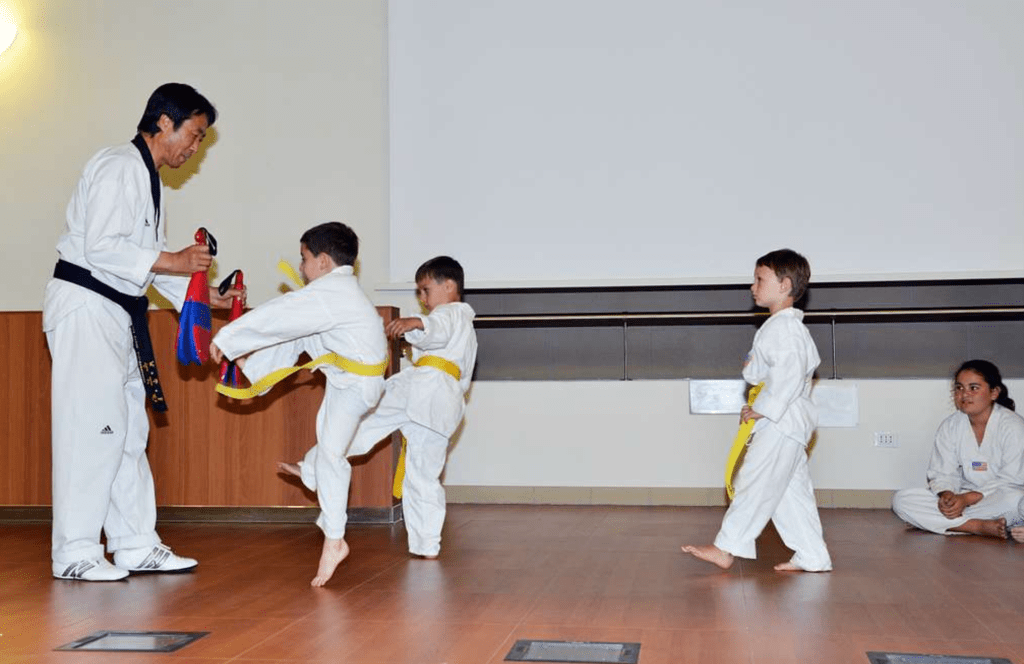
The Dobok has undergone several modifications to accommodate the growing diversity within Taekwondo. Initially, the uniform was plain white, symbolizing the beginning of a practitioner’s journey. As Taekwondo became an Olympic sport and its popularity surged worldwide, variations in the Dobok emerged. Today, different styles and organizations within Taekwondo might have slight variations in their Dobok design, including differences in fabric, color, and belt system, which often signifies the practitioner’s rank and progress.
Cultural significance
Beyond its practicality, the Dobok carries deep cultural and philosophical significance. It serves as a reminder of the martial art’s heritage and the values it embodies, such as respect, humility, and perseverance. The uniform is a symbol of the practitioner’s commitment to the path of Taekwondo, transcending beyond mere attire to represent the spirit and discipline of the martial art.
Conclusion
Overall, the Taekwondo uniform, or Dobok, reflects the martial art’s heritage and principles, evolving over time to meet the needs of practitioners.





 Taekwondo Together
Leave a comment