
In the realm of martial arts, Taekwondo and Karate stand out as two of the most popular disciplines. Both have evolved over centuries, each bearing its unique techniques, philosophies, and histories. This article explores the differences between Taekwondo and Karate, analyzing the distinct benefits each martial art offers.
Origins and History
Taekwondo is a relatively young martial art, formalized in the mid-20th century, originating from Korea. It developed under the influence of traditional Korean martial arts like Taekkyeon, Okinawan Karate, and Chinese martial arts. The name ‘Taekwondo’ derives from Korean words meaning “to kick” and “”to punch” reflecting the discipline’s techniques and philosophy.
Karate, formalized in Japan in the early 20th century, traces its roots back to the 17th century, beginning in Okinawa. The term ‘Karate’ means “empty hand,” focusing primarily on hand and foot striking techniques. Influenced by Chinese martial arts, Karate evolved over time, integrating Japanese bushido and philosophical elements.
Techniques and Training
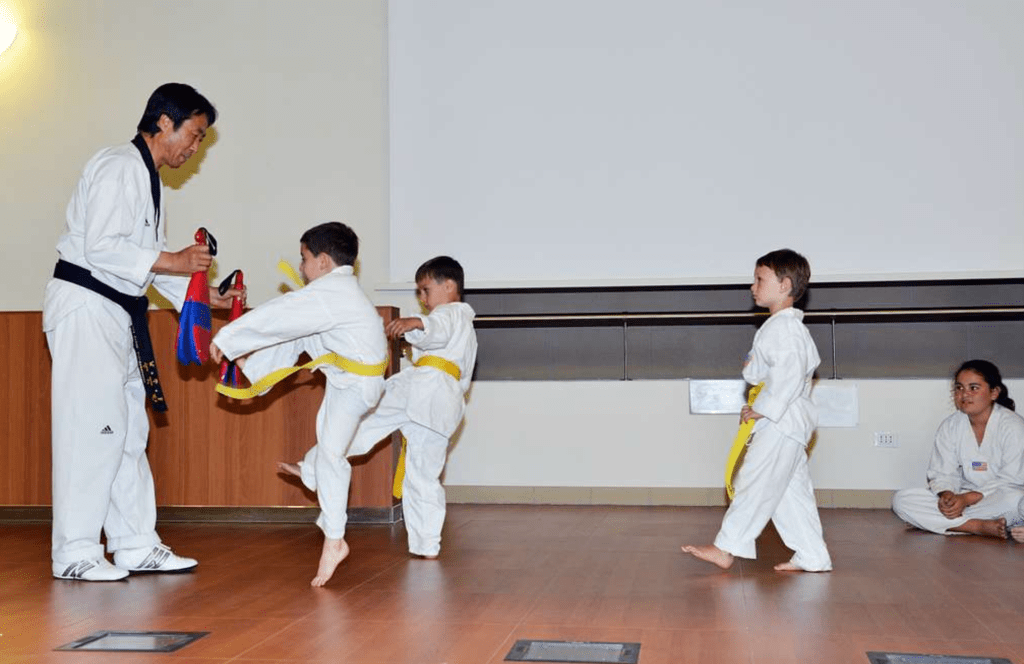
While both Taekwondo and Karate utilize striking and blocking techniques, each martial art emphasizes different aspects. Taekwondo places a greater emphasis on kicking techniques, featuring a wide array of kicks such as high kicks, spinning kicks, and jumping kicks. Training in Taekwondo highlights agility, flexibility, and rapid foot movements.
Karate pays attention to both hand and foot techniques but places a significant emphasis on hand techniques. It includes various striking techniques, blocks, and breaking techniques (designed to disrupt an opponent’s balance through strikes). Karate training focuses on power, precision, and timing.
Philosophy and Culture
Both martial arts possess deep philosophies extending beyond mere self-defense skills. Taekwondo and Karate encourage practitioners to become better individuals. Taekwondo emphasizes courtesy, integrity, perseverance, self-control, and indomitable spirit. Its philosophy encourages practitioners to live by a moral code, promoting peace and helping individuals to face challenges with resilience.
Karate follows the principle of “Do (道)” otherwise translated as “The Way,” which involves not only physical training but also character development; it allows one to enjoy both the journey and the destination. Karate teaches respect, humility, and the importance of a peaceful mind, guiding practitioners toward personal growth and self-improvement.
Competitive Aspect
Both martial arts have a competitive aspect, showcased in various tournaments worldwide. Taekwondo has been recognized as an Olympic sport since the year 2000, with sparring competitions emphasizing speed, agility, and the precision of kicks. Karate made its Olympic debut in the 2020 Tokyo Olympics, featuring kumite (sparring) and kata (form) competitions, highlighting technique, power, and control.
Conclusion
While Taekwondo and Karate share some similarities as martial arts, their distinct origins, techniques, and philosophical approaches set them apart. Whether one prefers the dynamic kicks of Taekwondo or the precise strikes and deep philosophical roots of Karate, both disciplines offer valuable skills and life lessons, making them much more than mere fighting





 Taekwondo Together
Leave a comment